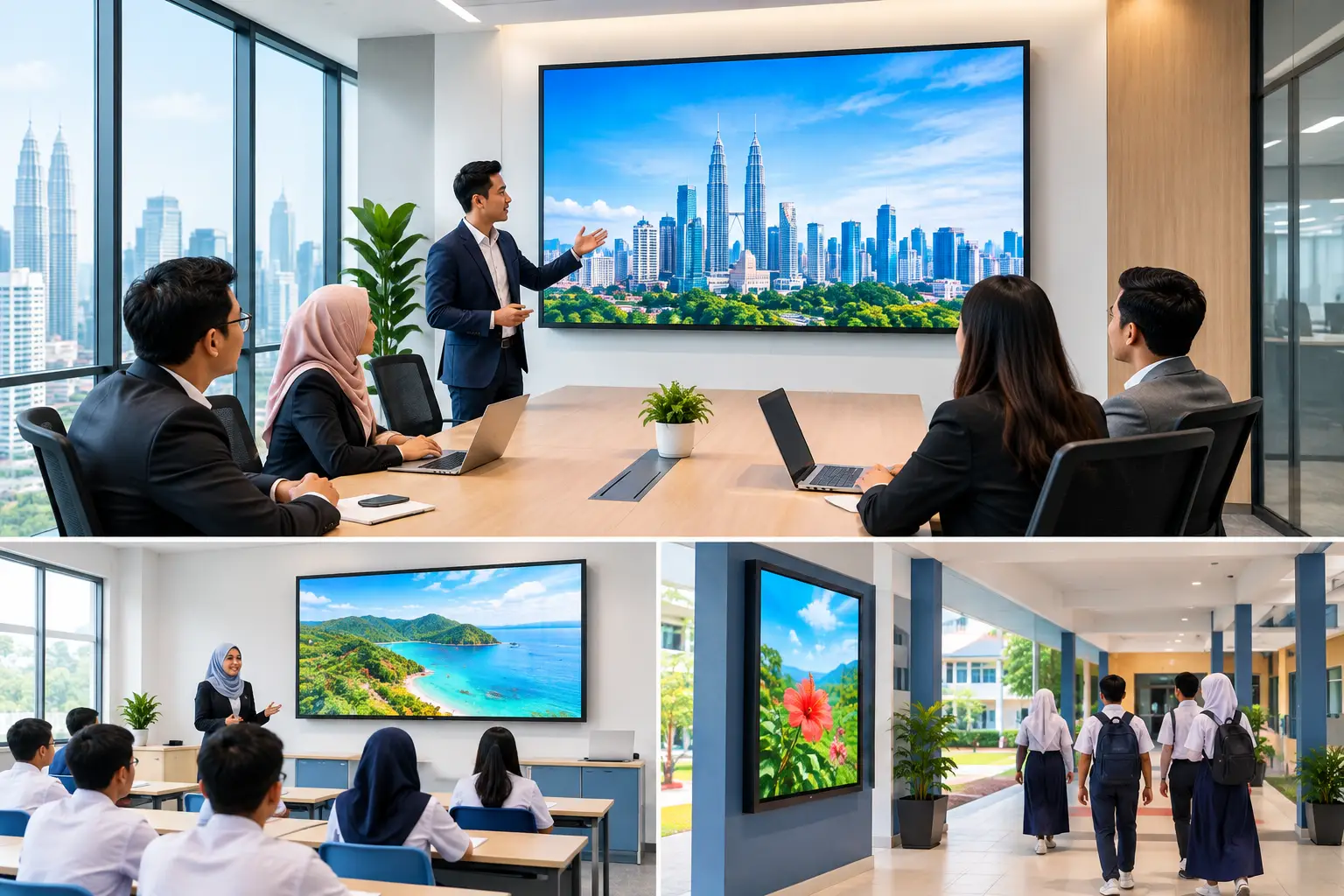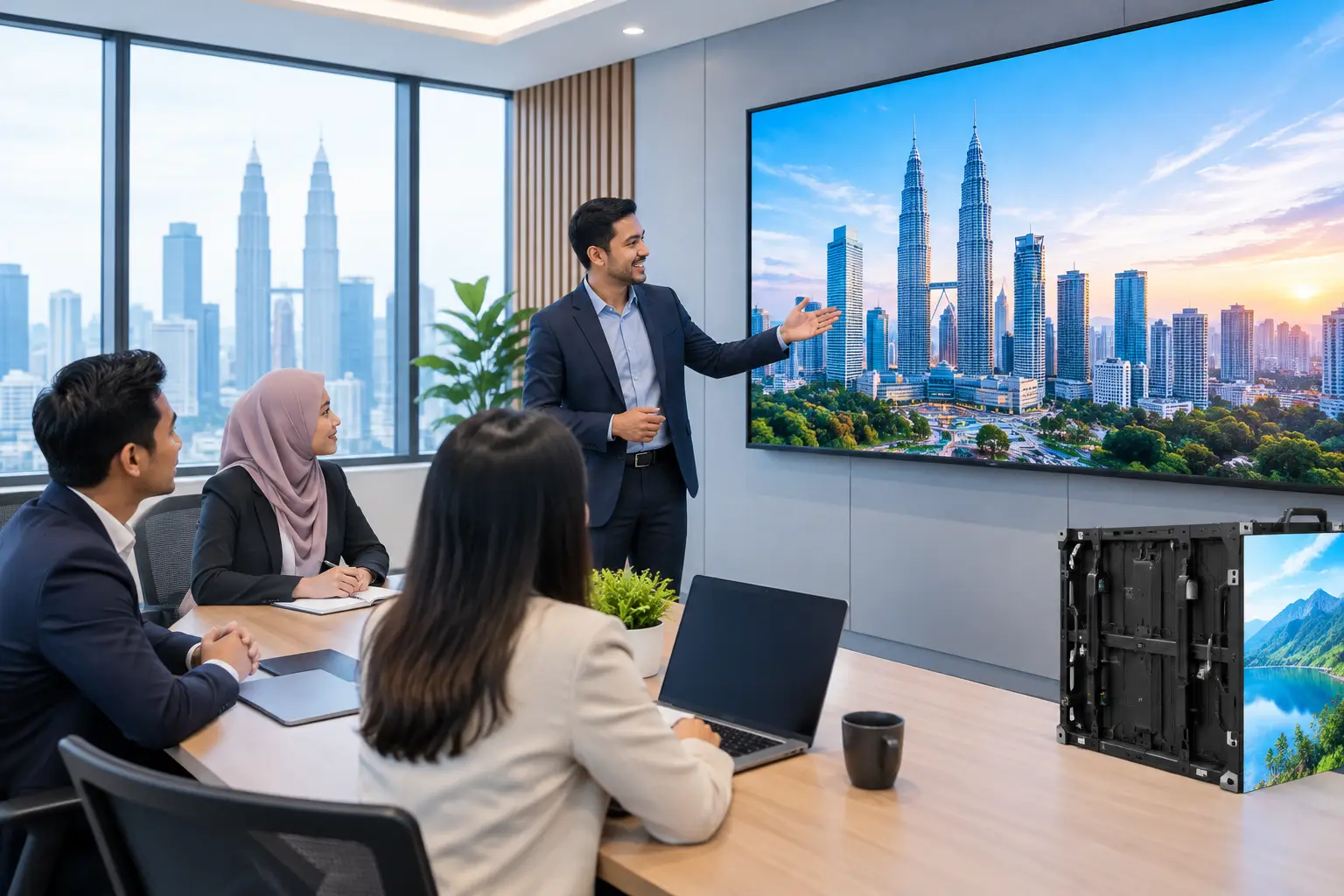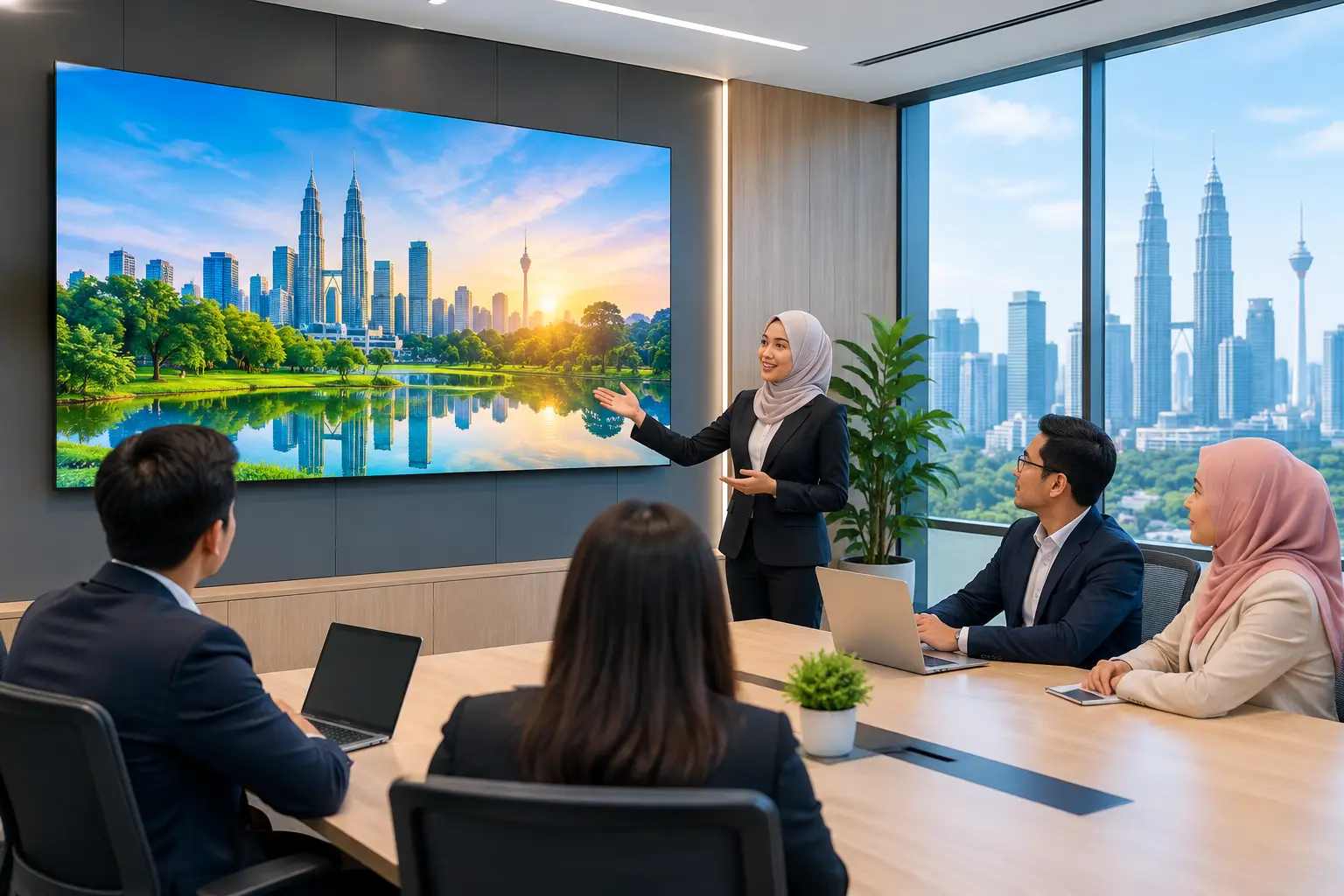
Indoor LED Display Malaysia: What Should You Buy?
An indoor LED display in Malaysia should be selected around viewing distance, room lighting and daily use, not simply screen size. For a boardroom, lobby or training hall, the right LED wall gives clearer communication and fewer presentation issues. The wrong choice can look coarse, glare under lights or become difficult to service.
How to choose an indoor LED display in Malaysia
Most buyers start with a wall size. That is understandable, but pixel pitch should come first. Pixel pitch is the distance between LED pixels, measured in millimetres. A smaller number creates a sharper image at close range, while a larger number can work well when viewers stand further away.
For example, an LED wall seen from a boardroom table needs a finer pixel pitch than one mounted high in a reception atrium. If staff sit two to four metres from the screen, coarse pixels can be distracting when reading spreadsheets, video call names or small presentation text. In a lobby where viewers are six metres away, a slightly larger pitch may offer better value without reducing practical visibility.
Room lighting matters too. Indoor LED displays need enough brightness to remain clear under office lighting and daylight from nearby windows. Excessive brightness, however, can make a meeting room uncomfortable during long presentations. A site survey helps establish whether blinds, ceiling lights, glass walls and viewing angles will affect the final result.
What pixel pitch do you need for an LED wall?
There is no single pitch for every workplace. The table below gives a sensible starting point for planning discussions. Final recommendations should take account of content, audience distance and the physical wall.
| Typical viewing distance | Common workplace use | Suitable planning direction | |---|---|---| | 2 to 3 metres | Small boardrooms, executive rooms, control areas | Fine pixel pitch for readable text and detailed content | | 3 to 5 metres | Medium meeting rooms, training rooms, collaboration spaces | Mid-fine pitch balancing image clarity and wall cost | | 5 to 8 metres | Reception areas, larger training halls, internal communications | Larger pitch may be suitable where viewers are further back | | Over 8 metres | Atriums, large halls, high-mounted information walls | Specify around viewing distance and message visibility |
A fine-pitch LED wall is not automatically the better purchase. It generally costs more and may not add visible benefit in a large lobby. Conversely, choosing a coarse pitch to reduce the initial budget can create a poor experience in a room where people work close to the display every day.
The content you intend to show also changes the decision. Corporate videos, welcome messages and large dashboards are forgiving. Detailed Excel sheets, engineering drawings and video conferencing layouts need higher clarity. An Office Solutions Specialist should ask what staff will actually display, rather than assume every screen will be used in the same way.
LED display or projector for a meeting room?
An LED display wall is often considered when a projector no longer provides the required impact or reliability. It performs well in brighter rooms and does not depend on replacing projector lamps or maintaining a perfectly clear projection path. It can also suit a high-use boardroom where the display needs to be ready throughout the day.
That said, a projector can still be a sensible choice for some rooms. If presentations happen occasionally, the room can be darkened and budget is limited, a quality Epson projector may meet the requirement. A projector also gives more flexibility where there is no suitable wall depth or access for an LED installation.
For close-up meetings, an interactive flat panel display (IFPD) is another option worth considering. An IFPD is particularly practical when teams need touch annotation, digital whiteboarding or direct laptop sharing in rooms typically using a 65-inch, 75-inch or 86-inch screen. An LED wall is usually chosen for a larger visual presence, a wider viewing area or a visitor-facing space where touch is not the main requirement.
Where indoor LED displays work best
Reception and customer areas are common locations because the display can communicate announcements, brand messages, visitor information and event content without relying on printed posters. The wall needs to be positioned so it is visible from the natural arrival route, not hidden behind a reception desk or competing with reflective glass.
In boardrooms, LED displays can make hybrid meetings easier to follow, particularly when a long table places some attendees far from a conventional screen. The design must still leave room for video conferencing cameras, microphones and speakers. A large display alone does not solve poor audio or badly placed cameras.
Training rooms benefit when a large group needs to see the same presentation clearly. This is especially relevant for product briefings, induction sessions and operational training. If trainers need to write on screen, compare an LED wall with an IFPD before deciding. The better fit depends on whether viewing impact or interactivity is the priority.
Internal communication areas can also benefit, but content ownership needs to be agreed first. An LED display with outdated notices quickly becomes background noise. Assign a team to update messages, set a content schedule and decide what should appear during normal working hours, events and emergencies.
What should an indoor LED display Malaysia project include?
The screen modules are only one part of the project. A usable installation starts with the wall structure, power availability, cable routes, ventilation and service access. These factors are easier and cheaper to address before the display is ordered than after it arrives on site.
Ask whether the design allows front maintenance, rear maintenance or both. Front maintenance is useful when the LED wall sits directly against an existing wall and there is no rear access. Rear maintenance may suit a purpose-built wall or partition, but it requires enough clearance for technicians to work safely.
Also consider how the display will receive content. A boardroom may need HDMI, wireless presentation and integration with Microsoft Teams or Zoom room equipment. A lobby may need a digital signage player and a simple process for changing messages. Confirm these needs early so the LED wall does not become a large screen with inconvenient controls.
Installation should include proper alignment, colour calibration and testing from the audience position. A small gap or uneven module is easy to spot on a large LED wall. User handover matters as well. The facilities, IT or administrative team should know how to power the system correctly, select inputs and raise a support request.
Hytech Office Automation can conduct a site survey, coordinate delivery and installation, train users and provide after-sales support with a response within 4 working hours. For Kuala Lumpur and Selangor organisations, this reduces the need to coordinate separate AV, electrical and display suppliers without a clear owner.
How to plan the budget without buying the wrong screen
Do not compare LED quotations by wall size alone. Two displays with the same physical dimensions can differ significantly in pixel pitch, cabinet design, brightness, controller capability, installation requirements and maintenance access. A lower initial figure may exclude structural work, cable management or the service arrangements needed for long-term operation.
Start with the room and business purpose. Measure the available wall, identify the nearest and furthest viewers, and list the content sources. Then decide whether the display is primarily for presentations, video conferencing, training, digital signage or a combination. This gives suppliers a clear brief and makes quotations easier to compare fairly.
It is also worth considering downtime. A reception display that carries visitor information may need a practical service arrangement and readily accessible modules. A display used only for quarterly town halls has different operational priorities. The right specification depends on the cost of disruption, not just the cost of hardware.
Frequently asked questions
How long does an indoor LED display last?
LED displays are designed for long-term use, but actual lifespan depends on operating hours, heat management, component quality and maintenance. A display used for scheduled business hours has different demands from one operating continuously in a public area.
Can an LED wall show Microsoft Teams or Zoom meetings?
Yes, provided the display is connected to the meeting-room system or a suitable input source. Plan camera, microphone and speaker positions as part of the room design, because a large picture does not improve a meeting if participants cannot hear each other clearly.
Is a finer pixel pitch always better?
No. Fine pixel pitch is valuable when viewers sit close to the display or need to read detailed information. For viewers standing further away, it may increase cost without producing a meaningful improvement.
Can an indoor LED display be installed on any wall?
Not always. The wall must support the installation method, while power, cabling, ventilation and maintenance access need to be checked. A complimentary on-site consultation can identify these issues before a specification is finalised.
Who should manage the content on an LED display?
The organisation should nominate a person or team, often marketing, communications, reception or IT. Clear ownership keeps information current and ensures the screen remains useful after installation.
A well-planned LED wall should make meetings clearer or visitor communication more useful from its first day, not create another system staff avoid using. Book a showroom demo at the Maxsmart Experience Centre in Pavilion Damansara Heights to view workplace display options in a real boardroom setting and discuss the right approach with an Office Solutions Specialist.